


 509-410-4721
Quick answer: A good roof maintenance checklist covers four places: the shingles (missing, curled or bare spots), the "penetrations" (vent boots, flashing, chimney), the drainage (gutters, downspouts, valleys) and the attic (stains, ventilation). This Old House recommends a visual check twice a year and after any major storm, plus a professional inspection once a year. Most of it can be done from the ground and the attic; the on-roof work is where a roofer earns their fee.
Roof maintenance is mostly looking. A roof rarely fails all at once; it lets go at one cracked vent boot, one lifted shingle tab or one clogged valley, and the damage spreads from there. This roof maintenance checklist is built for homes around Kennewick, Richland and Pasco, where the problems come from strong sun, Columbia Basin wind and winter freeze-thaw rather than moss and constant rain.
Work through it twice a year. If you'd rather hand the on-roof part to someone else, our roof maintenance visits cover the same list and end with a written report.
Why Roof Maintenance Matters on a High-Desert Roof
Asphalt shingles last about 20 to 30 years, according to This Old House (updated April 2026), and the inspectors' association it cites puts three-tab shingles at about 20 years and architectural shingles at about 30. Where your roof lands in that range depends a lot on climate and care. This Old House notes that heat speeds up UV damage to asphalt shingles, and that regular inspections, clean gutters and quick small repairs extend a roof's life.
That's the Tri-Cities in a sentence. Long, hot summers dry out shingles and the rubber around plumbing vents.
Hot days and cool nights make metal flashing expand and shrink. Wind lifts shingle tabs and breaks the seal under them. In winter, water melts into small gaps by day and freezes at night. None of these is dramatic on its own, which is exactly why they get missed.
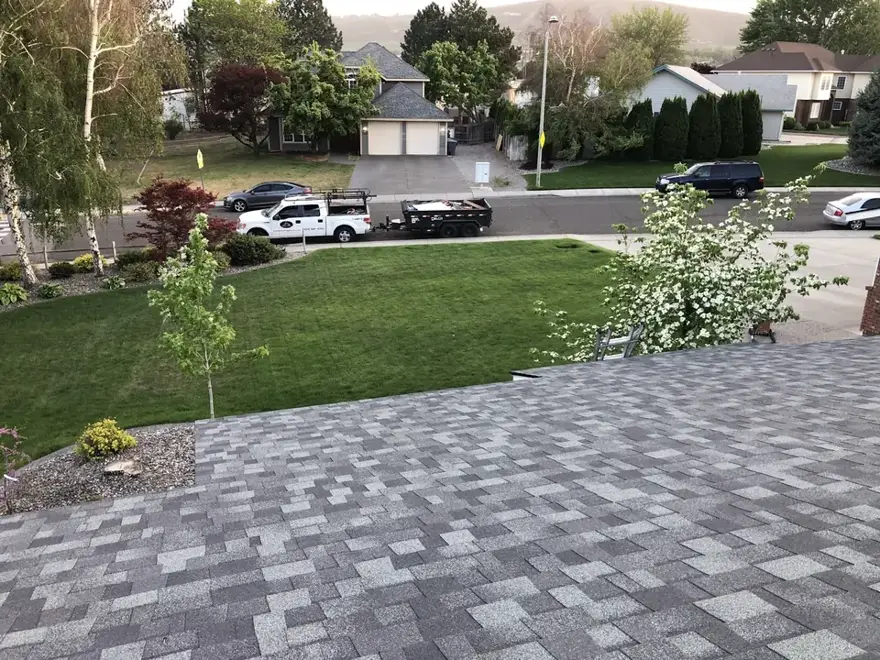
Roof Maintenance Checklist: From the Ground
Start here. This Old House suggests a pair of binoculars so you can check the roof without climbing it. Walk all four sides of the house and look for:
- Missing, cracked or curled shingles, especially along the edges, the ridge and the side that faces the prevailing wind.
- Shingle tabs that look lifted or sit at a different angle than their neighbors. A tab that has lost its seal can flap and tear in the next windstorm.
- Dark or shiny bare patches where the granules have worn off.
- Granules in the gutters or at the bottom of downspouts. Some loss is normal on a new roof; a lot of it on an older roof is a sign the shingles are wearing out.
- Flashing that looks bent or pulled away at the chimney, skylights and where a roof meets a wall.
- Sagging gutters, overflow stains on the siding, or downspouts that dump water against the foundation.
- Sagging or wavy roof lines. A dip in the roof plane can mean soft decking underneath, and that one is worth a call right away.
From the Attic
The attic shows you what the outside can't. Take a flashlight up after a rain or a snow melt and check:
- Stains or dark spots on the underside of the roof deck and on rafters, especially around vent pipes and the chimney.
- Daylight coming through anywhere it shouldn't.
- Damp or matted insulation. Water often runs along a rafter before it drips, so the wet spot may be several feet from the leak.
- Blocked vents. Insulation pushed into the soffit vents stops airflow. This Old House notes that a poorly vented attic can reach 140 degrees Fahrenheit or more in summer, which cooks shingles from underneath, and in winter traps moisture that turns to frost.
On the Roof (or for Your Roofer)
These are the items that need someone on the roof. They're also where most leaks start:
| What to check | What goes wrong here | Typical repair cost (This Old House, Mar 2026) |
|---|---|---|
| Vent pipe boots and roof vents | Sun cracks the rubber collar; water runs down the pipe | $75 to $250 |
| Flashing at chimneys, walls and skylights | Expansion and contraction loosen it; sealant dries out | $200 to $500 |
| Ridge cap | Wind catches the top row first | $250 to $750 |
| Valleys | Debris and tumbleweed bits build up and dam water | $300 to $1,000 |
| Field shingles | Lifted or missing tabs after wind | $50 to $800 |
Compare those with the national average replacement cost of about $15,439 that This Old House lists in the same guide, and the case for catching problems early makes itself. A cracked vent boot is a small fix. Left alone for a winter, the same boot can mean wet insulation, a ceiling stain and soft decking. If you've already got water inside, see our guide on whether home insurance covers a roof leak.
A Season-by-Season Roof Maintenance Schedule
| When | Focus | Why it matters here |
|---|---|---|
| Spring | Full ground check, attic check, clear gutters and valleys | Find what winter ice and wind did before summer heat makes it worse |
| Early summer | Vent boots, sealant, attic ventilation | Heat and UV are hardest on rubber and sealant |
| Fall | Reseal flashing, clear gutters, fix lifted tabs | Shingles need warm weather to seal; cold-season repairs are harder |
| After any windstorm or hail | Walk the yard for shingle pieces, check the edges and ridge | Wind damage is easiest to fix, and to document, right away |
Fall is the one not to skip. New shingles need warmth to seal down, and repairs on an icy roof are risky, so a problem found in December may have to wait for spring. If a windstorm has already torn shingles loose, skip ahead to a roof repair instead of waiting for the next season.
What to Do Yourself and What to Leave Alone
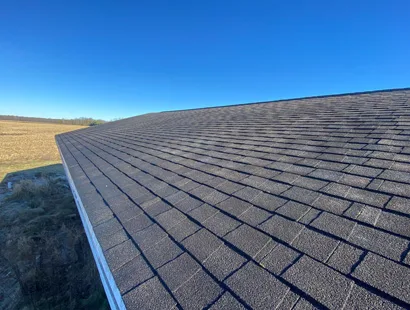
Safe for most homeowners: the ground walk with binoculars, the attic check, keeping downspouts clear at ground level, trimming branches that touch the roof, and cleaning gutters from a properly set ladder.
Don't pressure wash. Bob Vila (May 2024) advises against pressure-washing shingles because the spray can strip the granules and push water under the shingles. A garden hose at normal pressure is the most a shingle roof should see.
Ladder rules matter. OSHA's portable ladder guide says to set the base one foot out for every four feet of height, extend the ladder at least 3 feet above the edge you're stepping onto, keep three points of contact, and look for overhead power lines before you raise it. Falls from ladders are one of the leading causes of work injuries, and they happen to homeowners too.
Leave to a roofer: walking the roof, especially on a hot summer afternoon when shingles scuff easily; resealing or replacing flashing; replacing vent boots; and anything on a steep or two-story roof.
What Our Roof Maintenance Visit Covers
Roofing Plus LLC's maintenance visits are built around the same checklist. We get on the roof and check:
- Shingle condition and granule loss, plus the ridge cap and hip shingles
- Flashing around chimneys and skylights, with resealing where it's needed
- Vent pipe boots and seals, and caulking and sealant condition
- Gutter and downspout flow, with debris cleared from the roof and gutters
- Fascia and soffit condition and attic ventilation
- Signs of water staining, rot and storm damage
Loose shingles, missing fasteners and cracked caulk get fixed during the visit when we find them. You get a written report of what we found, what we did and what to watch, plus an estimate of how much life the roof has left. If it's been years since anyone looked, a full roof inspection is a good place to start.
Book roof maintenance online or call 509-410-4721. We serve homeowners across the Tri-Cities, including:
Sources (checked November 6, 2026). Repair costs are national figures, not a quote.
- This Old House: How long does a roof last? (updated April 7, 2026)
- This Old House: Roof repair cost (updated March 5, 2026)
- Bob Vila: How to clean roof shingles (May 25, 2024)
- OSHA: Portable ladder safety QuickCard